Lets Just say something about Handwriting The writing custom we learned during our time at school are very difficult to misplace, as we get use to the particular way that we clasp a pen, form the letters we write and how we space our words and lines. Those are the factors that prove informative during the analysis of a document. Investigators analyze these aspects of suspicious documents i.e the printing style, paper and ink, all of which help to identify a forged letter.
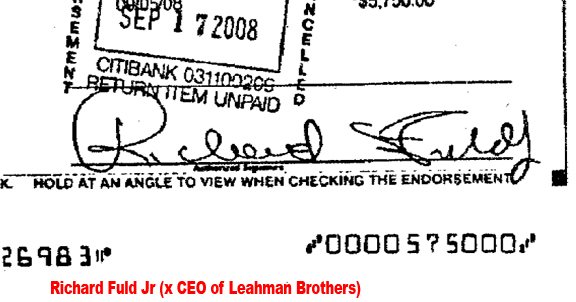
The handwriting section of forensic science involves relating and the authentication of written documents such as ransom notes, forged contracts, forged wills, fake ID's and passports and any additional form of writing or printed material. The analysis of someone's handwriting is most frequently used to prove that two documents were written by the same person. When looking at a person's handwriting, the examiners usually look for personalized characteristics under four areas including line quality, form, content and arrangement.
The analysis of writing involves investigating the shape of singular letters and identifying if the slant is in a certain direction, the size and how they are connected with the next letter. Strange characteristics, such as the use of a plus sign or the amperes and are also noted. Examining the content of written and printed papers is done to identify similarities between punctuation, spelling, grammar, vocabulary and paragraph phrasing.Document examiners contrast unidentified documents with a 'standard', a sample from a suspect. A standard is usually formed by the suspect under supervision. Even under supervision, the suspect still has the chance to disguise their handwriting, which is why investigators then have to collect other standards of casual handwriting from a suspect. The casual handwriting is undisguised and can therefore be compared with the unknown sample either with words that match or letter-by-letter.
Primarily, comparisons are done with the naked eye or with a hand held lens, however, the methods used today are by far more precise. Special lighting can help to reveal small, but valuable details about how a document was altered or created. Angled lights identify indents on the paper, which suggests that a signature was traced and also shows the roughness left on the paper after an eraser has been used. Backlighting makes areas where an eraser has been used, turn lighter and makes correction fluids dark. Examination using an infrared spectroscope can identify if ink, that appears the same colour, is actually from a different source by giving each color a different cipher.
In the beginning.... Before there was writing, there was only verbal communication, with cultural norms, rituals and stories passed on orally from one generation to the next. As language and cultures evolved, so did the need for communication. Simple drawings became pictographs, and pictographs became standardized within each culture.
What is writing? Writing is a codified system of standard symbols: the repetition of agreed-upon simple shapes to represent ideas. Recognizable systems of writing developed in 3 major cultures within 1200 years of each other. Sumerian cuneiform developed
around 3000 BC, Egyptian hieroglyphs around 2800 BC, and the precursor to Kanji Chinese around 1800 BC. The creation of writing permitted cultures to record events, history, laws; theories in math, science, medicine; generate literature and more.
Simple pictographs were used to represent people, places and things. As the needs for communication expanded, different pictographs were combined to represent ideas, and required knowledge to interpret the new symbols. These became ideographs: abstract symbols that evolved beyond the original drawings.



_54.jpg)